
Today's post is going to be a more personal one, about something that really gets to me and some days, overthinking about it very much affects my mental health. Since graduating from university, I have not been able to work. I have not been able to join in with my peers applying for jobs, going to interviews or starting graduate internships. If you are a regular reader of my blog, you will know that I am a spoonie, that I have several invisible illnesses, that I suffer from chronic pain. I have fibromyalgia, irritable bowel syndrome, asthma, generalised anxiety disorder and depression. Throughout my degree, these conditions emerged in full force and changed my life. Having to deal with physical and mental chronic illness is so difficult because of the symptoms but also because of how it impacts your everyday life. It's stressful not being able to work and I wanted to discuss my thoughts about why.
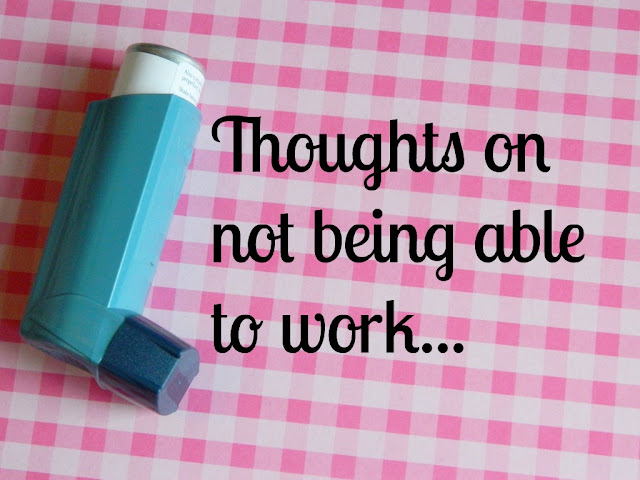
Not being able to work makes me feel left out. It makes me feel almost like I'm being left behind, stuck at home, whilst I have to watch my friends and fellow graduates venture into an exciting new chapter of their lives. Working is fulfilling and it brings with it lots of opportunities. It's fun to meet new people and to work within a team, plus you can achieve your goals and be proud of your work. It makes me sad that I'm missing out on experiencing this, and more often than not this feeling of missed opportunities fuels my depression and anxiety. I overthink about the future and when and if I will ever be able to follow my career dreams. I live with a feeling of dread, of gloom, because I want to be doing more with my life and the fear that I won't get to do some of the things I wanted to with my life is sometimes overwhelming.
Another problem that not being able to work brings is everyone just assuming that it's a temporary problem. People expect that you're going to recover soon and then be ready to go back to work or in my case, start looking for work. Sometimes explaining that you're not sure when you'll be able to work is hard so it's easier to just say that you're ill at the moment and although the people in my life know I struggle from anxiety and fibromyalgia, they don't fully understand what that means. Anxiety is seen as 'just abit of worry', 'everybody gets nervous', 'I'm anxious about that too' and they assume that this isn't enough to impact your life. They don't get that anxiety is a serious mental health condition. As for physical health, it's a classic case of 'but you don't look ill', therefore I must be able to work. People can't see the pain you have to endure everyday, they cannot see the sleepless nights, the never-ending fatigue, and all of the other symptoms that accompany it. So as a result, I am still asked 'have you been applying for any jobs?' whenever I have a catch-up with friends. I know they are just curious about how my life is, about how I'm getting on after university, but it's a constant reminder that I'm not working when I wish I could be.

Not being able to work sometimes makes me feel like I'm wasting my degree. I worked so hard to get to university, to prove wrong everyone who ever doubted me and to make myself proud. The year before I went was a very hard time, the depression I'd experienced in my early teens came flooding back and I believed university would be a fresh start, the most amazing time of my life. Unfortunately, my body had other ideas and not long after I'd settled in, my health started to get worse. By the time I'd gotten to my third year of study, I was at an all time low. My mental health was really severe and it was one hell of a struggle to make it to the end of my degree. I sometimes find myself thinking about how much I endured and for what? Yes, I am proud of myself, I proved just strong I can be, but I feel lost when I think about the fact that I am not using any of the skills I learnt.
Facebook can be a nightmare for reminding me what everybody else is doing and what I am not, and as most of us know it's really difficult not to compare. I see my fellow graduates working in zoos all over the world and I have so much admiration and excitement for them, but I also feel a little jealous too. I want to be living my dream, and coming to terms with the fact that it might not happen is challenging. I like to stay positive as much as I can, but also want to be real with myself to prepare for what could happen.

A final issue that makes not being able to work hard is dealing with judgemental and irritating comments. 'You are so lucky that you don't have to work!', 'I wish I could just stay at home all day', 'At least you don't have to work a 12 hour shift', are just some of the comments I've experienced and I'm sure my fellow spoonies can add many more to the list. It's difficult to not get really angry sometimes, like yeah, I'm so lucky to be in pain constantly; I feel like I've worked a 12 hour shift of hard labour when all I've done is have a shower and tidied my bedroom! I wish people could understand just how stressful it is that I don't have a choice, I am not capable of being able to work right now.
Although I cannot work at the moment, who knows what the future will hold. I am trying my hardest to work towards recovery and getting to a good place with my mental health. Only then can I start the journey of finding out what I am capable of. There are days when not being able to work are bloody tough, but not as tough as having to deal with my health so I need to try my best not to let the opinions of others get me down and be confident in the fact that I have to deal with so many things that they do not. I am a warrior, I am strong and even though I may not be able to get my dream career, I can still enjoy my life :) I hope you all enjoyed this post and that it has been a helpful one. Sorry if I ranted too much haha

Not being able to work makes me feel left out. It makes me feel almost like I'm being left behind, stuck at home, whilst I have to watch my friends and fellow graduates venture into an exciting new chapter of their lives. Working is fulfilling and it brings with it lots of opportunities. It's fun to meet new people and to work within a team, plus you can achieve your goals and be proud of your work. It makes me sad that I'm missing out on experiencing this, and more often than not this feeling of missed opportunities fuels my depression and anxiety. I overthink about the future and when and if I will ever be able to follow my career dreams. I live with a feeling of dread, of gloom, because I want to be doing more with my life and the fear that I won't get to do some of the things I wanted to with my life is sometimes overwhelming.
Another problem that not being able to work brings is everyone just assuming that it's a temporary problem. People expect that you're going to recover soon and then be ready to go back to work or in my case, start looking for work. Sometimes explaining that you're not sure when you'll be able to work is hard so it's easier to just say that you're ill at the moment and although the people in my life know I struggle from anxiety and fibromyalgia, they don't fully understand what that means. Anxiety is seen as 'just abit of worry', 'everybody gets nervous', 'I'm anxious about that too' and they assume that this isn't enough to impact your life. They don't get that anxiety is a serious mental health condition. As for physical health, it's a classic case of 'but you don't look ill', therefore I must be able to work. People can't see the pain you have to endure everyday, they cannot see the sleepless nights, the never-ending fatigue, and all of the other symptoms that accompany it. So as a result, I am still asked 'have you been applying for any jobs?' whenever I have a catch-up with friends. I know they are just curious about how my life is, about how I'm getting on after university, but it's a constant reminder that I'm not working when I wish I could be.

Facebook can be a nightmare for reminding me what everybody else is doing and what I am not, and as most of us know it's really difficult not to compare. I see my fellow graduates working in zoos all over the world and I have so much admiration and excitement for them, but I also feel a little jealous too. I want to be living my dream, and coming to terms with the fact that it might not happen is challenging. I like to stay positive as much as I can, but also want to be real with myself to prepare for what could happen.

A final issue that makes not being able to work hard is dealing with judgemental and irritating comments. 'You are so lucky that you don't have to work!', 'I wish I could just stay at home all day', 'At least you don't have to work a 12 hour shift', are just some of the comments I've experienced and I'm sure my fellow spoonies can add many more to the list. It's difficult to not get really angry sometimes, like yeah, I'm so lucky to be in pain constantly; I feel like I've worked a 12 hour shift of hard labour when all I've done is have a shower and tidied my bedroom! I wish people could understand just how stressful it is that I don't have a choice, I am not capable of being able to work right now.
Although I cannot work at the moment, who knows what the future will hold. I am trying my hardest to work towards recovery and getting to a good place with my mental health. Only then can I start the journey of finding out what I am capable of. There are days when not being able to work are bloody tough, but not as tough as having to deal with my health so I need to try my best not to let the opinions of others get me down and be confident in the fact that I have to deal with so many things that they do not. I am a warrior, I am strong and even though I may not be able to get my dream career, I can still enjoy my life :) I hope you all enjoyed this post and that it has been a helpful one. Sorry if I ranted too much haha
Thankyou for reading!
♥
Are you not able to work right now? What are your thoughts on that?
Are you a spoonie that works? If so, what is the most hardest thing about working?
Follow me on social media


